Reviving Himalayan Gold: Saffron Cultivation in Mountain Terraces
How highlanders are adapting Kashmir's legendary Crocus sativus to Uttarakhand's alpine soil
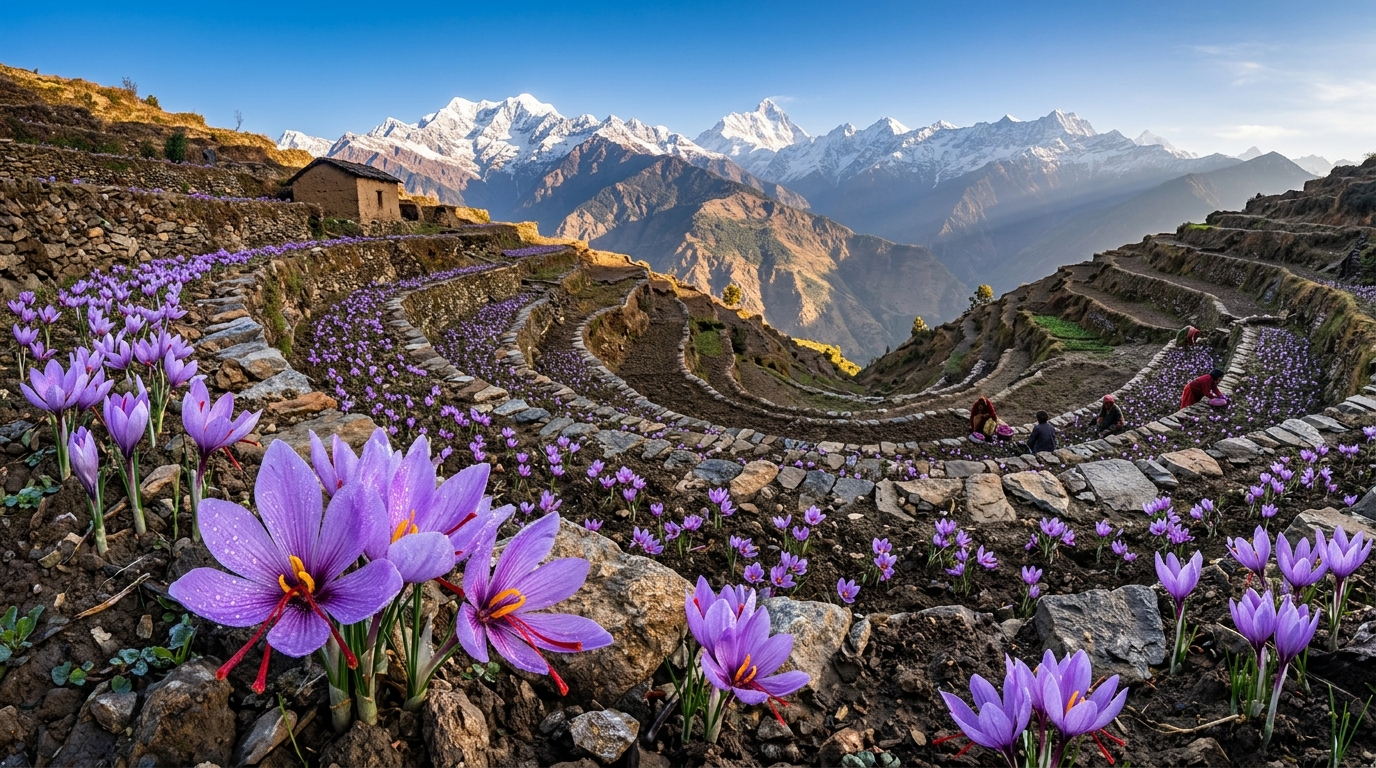
Saffron (Crocus sativus) is the world's most precious spice by weight. Traditionally concentrated in the Pampore plateaus of Kashmir, changing climatic envelopes have created an urgent opportunity for high-altitude Uttarakhand hamlets.
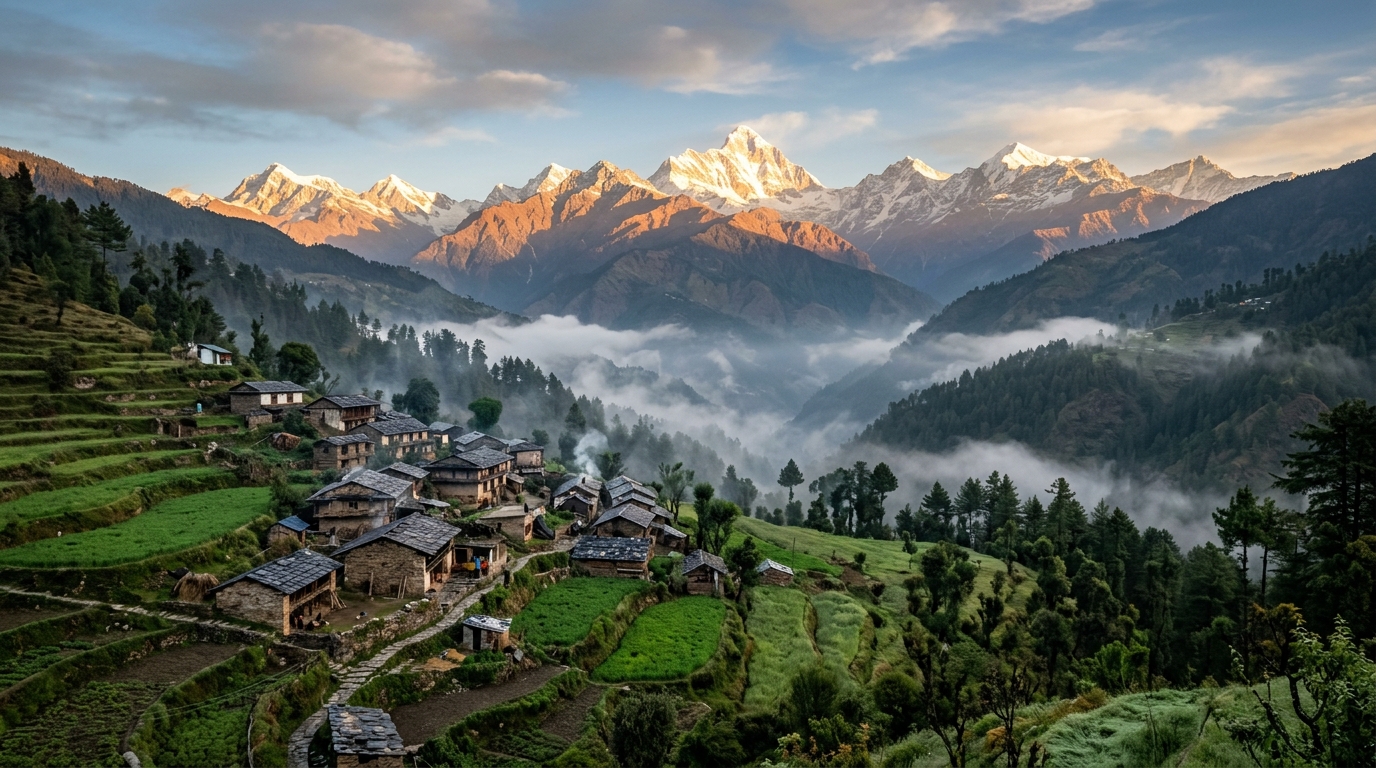
In our home village of Kotsada, Pauri (Devbhoomi Uttarakhand), our sloped mountain terraces receive the ideal micro-climatic requirements: crisp dry autumn mornings during October flowering, and natural gravity drainage that naturally prevents the bulb rot that plagues flat-land growers.
Our cultivation protocol rejects synthetic chemical inputs in favor of traditional indigenous techniques: well-composted oak leaf mould (Banjh compost) blended with local forest loam and wood ash, and Grade-A corms treated with bio-fungicides.
A quarter-acre of traditional finger millet (Madua) yields roughly ₹8,000 to ₹12,000 in local trade. The same parcel of land, inter-cropped with saffron corms, yields up to ₹75,000 while restoring soil biodiversity. This provides a sustainable economic foundation allowing young families to remain and flourish in their ancestral mountain villages.